
Projected Jet A Fuel Prices After Control of Venezuela’s Oil Supply: What Operators Should Know
.jpeg)

Blog
Fuel is one of the biggest variables in aviation operations—and one of the hardest to predict. For private aviation customers, charter operators, and fleet managers alike, Jet A pricing can impact everything from trip timing to route selection to overall cost strategy.
With ongoing speculation about potential changes in Venezuela’s oil output and market control, many aviation professionals are asking the same question:
If Venezuela’s oil supply becomes more stabilized and ramped up, what could that mean for Jet A fuel prices?
While no single country dictates fuel pricing alone, Venezuela represents a notable lever in global energy supply. More consistent production, fewer disruptions, and improved export capacity can contribute to shifts in crude oil pricing—which eventually influences refined products like Jet A.
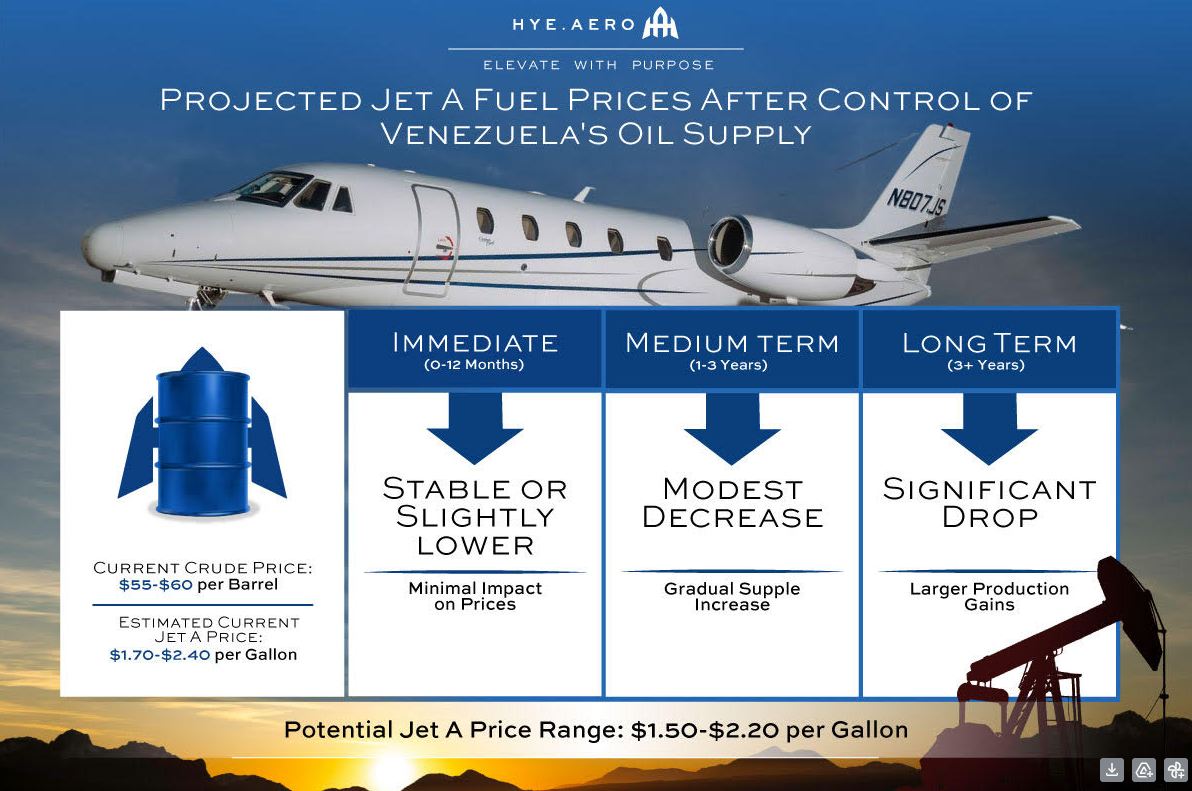
Below is a realistic projection of what operators could see across three key timeframes: immediate, medium-term, and long-term. It is important to note this is in terms of wholesale cost.
The Starting Point: Where Jet A Pricing Stands Today
Jet A fuel prices are tied closely to crude oil markets, but they also depend on refining, distribution, and regional supply constraints. That means even when crude drops, Jet A doesn’t always fall at the same speed.
At today’s approximate crude levels, the average Jet A market range often lands around:
$1.70–$2.40 per gallon (varies by region, taxes, delivery fees, and airport markups)
That difference is important—because a high-cost airport can add major expense to a multi-leg mission, especially when you’re fueling larger aircraft or operating frequently.
Immediate Outlook (0–12 Months): Stable or Slightly Lower
In the near term, even major supply changes typically cause minimal, gradual movement in Jet A pricing. Why?
Because fuel markets don’t respond instantly in a clean, predictable way. In the immediate window, operators can expect stable pricing with the possibility of a slight decline—especially if market confidence increases and supply disruptions calm.
What this means for flight departments:
- Budgeting stays mostly consistent
- Slight relief may show up in certain regions first
- Best strategy remains smart fueling decisions (avoid high-markup airports when possible)
If you’re running charter ops or forecasting client trip costs, the immediate term is all about maintaining flexibility—not assuming dramatic price drops.
Medium-Term Outlook (1–3 Years): Modest Decrease Potential
As production changes become more established, you may see a more noticeable shift. If Venezuela increases output consistently and global supply remains steady, Jet A could experience a modest decrease over the medium term.
This is where the benefits start to show for operators, especially those who fly frequently, manage aircraft utilization tightly, or need to keep per-hour costs competitive.
What this means for operators:
- Jet A may become more predictable
- Margins improve slightly for charter and fleet operations
- More efficient long-range planning becomes possible
A modest decrease doesn’t mean fuel becomes “cheap,” but even small reductions per gallon can add up quickly when you’re fueling thousands of gallons per month.
Long-Term Outlook (3+ Years): Significant Drop Is Possible (But Not Guaranteed)
Over the long term, if Venezuela achieves sustained production growth and overall global energy markets remain balanced, Jet A pricing could drop more meaningfully.
That said, long-term fuel projections always come with asterisks. Global demand, refining capacity, regulations, geopolitical events, and alternative fuel adoption all influence pricing over a multi-year window.
But under strong supply-growth conditions, Jet A could fall into a more favorable range over time.
A realistic future range could look like:
$1.50–$2.20 per gallon
That kind of shift would be significant for aviation—not just in cost savings, but in operational decision-making.
What this could unlock:
- Reduced trip costs for private flyers
- Improved affordability for mid-size aircraft operations
- More efficient pricing for charter customers
- Increased demand for discretionary travel due to lower operating costs
In other words: fuel pricing can directly affect flight volume.
What This Means for HYE Aero Clients: Planning With Purpose
At HYE Aero, we believe smart aviation decisions aren’t based on headlines—they’re based on strategy. Fuel price projections are helpful, but the real advantage comes from how you plan around them.
Here’s what we recommend for operators and clients looking ahead:
1. Build fuel flexibility into trip planning
Avoid being locked into expensive airports or fueling decisions. Strategically selecting where and when you fuel makes more impact than most people realize.
2. Track regional pricing, not just “average fuel cost”
The national average rarely reflects what you’ll pay at specific airports. Some locations consistently run higher due to delivery constraints or demand.
3. Treat fuel like a controllable expense
You can’t control global oil supply—but you can control the decisions that determine your per-trip burn cost.
4. Stay positioned for market shifts
If the medium-to-long term produces downward movement, that’s an opportunity to optimize, expand flying schedules, and improve cost efficiency.
Final Thoughts: A Market Opportunity, Not a Guarantee
If Venezuela’s oil supply becomes more stable and production increases, Jet A prices may ease over time. In the short term, the impact is likely minimal. In the medium term, modest decreases are realistic. And in the long term, there’s potential for a more noticeable drop—depending on how global conditions evolve.
What matters most is staying prepared.
Because in private aviation, profitability and peace of mind come from planning ahead—long before the fuel truck arrives.
CONTACT US

Contact us
Help
You
Elevate