What the ATC Staffing Crisis Actually Means for Private Aviation

Blog
The staffing shortage inside air traffic control is real, years in the making, and more nuanced than the headlines suggest. Here's what experienced private aviation operators actually think about it.
If you've been following aviation news lately, your feed looks a lot like ours. Incidents. Investigations. Op-eds about systemic failure. And somewhere in the middle of all of it, a very reasonable question: should I be worried about flying?
We sat down to answer that honestly.
The Statistic That Still Stands
Aviation remains the safest form of transportation on the planet. That hasn't changed.
But safety statistics don't tell the whole story. Because the current environment isn't about bad luck. It's about a structural problem that everyone inside this industry has watched building for years, and that's now getting the public attention it deserves.
The FAA has been short on air traffic controllers for a long time. At the end of fiscal year 2025, the FAA employed approximately 13,164 controllers, about 6 percent fewer than in 2015, while total flights using the air traffic control system increased by about 10 percent over that same period.
That gap between supply and demand is not theoretical. It has consequences.
Why You Can't Just Hire Your Way Out of This
This is the part most people don't understand when they hear about the shortage. The instinct is: if you need more controllers, hire more controllers. Simple.
Except it isn't.
The path to becoming a certified controller is long, demanding, and highly competitive. Less than 10 percent of applicants meet the basic criteria to enter training, and only about 2 percent of initial applicants make it all the way through the full process.
And the training itself takes years. Graduates of the FAA Academy are assigned to a specific facility, where on-the-job instruction from senior controllers can take 18 months to four or more years for the most demanding locations.
Meanwhile, FAA rules require all controllers to retire when they turn 56, creating constant attrition from an already thin workforce. Some controllers are leaving even earlier, with stress and scheduling pressure accelerating departures.
The math doesn't add up. Even with 2,000 new hires in a single year, analysts estimate it could take eight to nine years to reach full staffing levels.
What "Understaffed" Actually Looks Like on the Ground
At the start of 2025, approximately 91 percent of U.S. air traffic control facilities were operating below the FAA's recommended staffing levels. At 73 of those locations, at least a quarter of the workforce was missing.
This isn't a handful of remote outposts. This is a systemic condition across facilities that manage some of the most complex and high-volume airspace in the world.
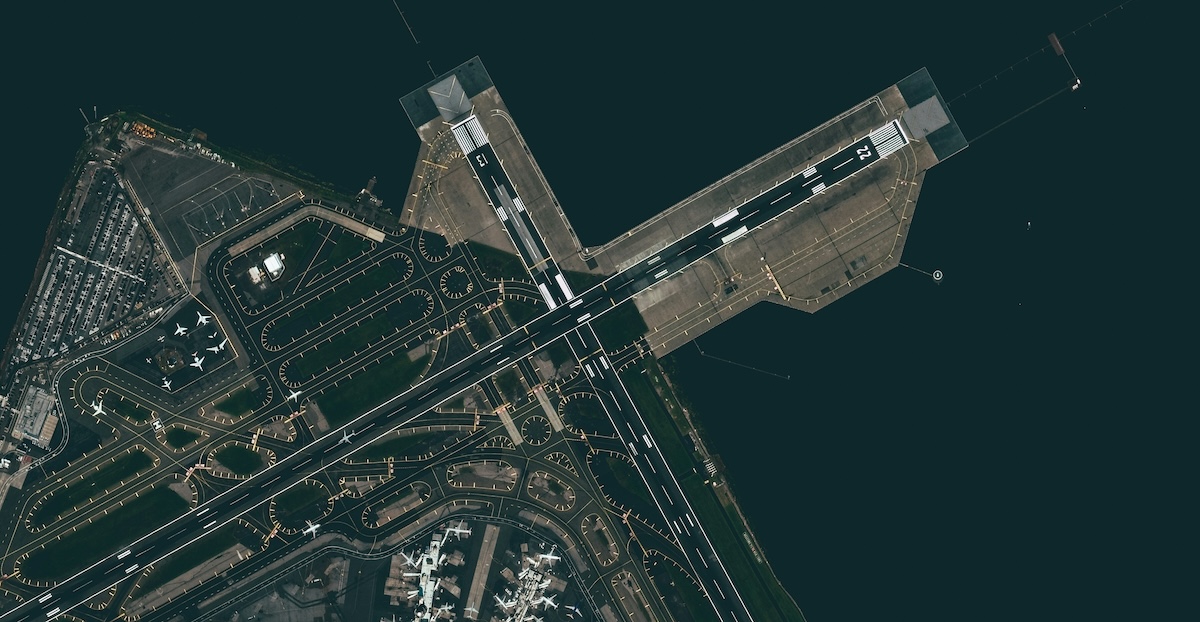
The Reagan National collision in January 2025 brought this into sharp focus. It was confirmed that one controller in the tower was staffing two different jobs simultaneously, handling both local air traffic and helicopter traffic in the area.
That's not a personnel failure. That's what a system under chronic pressure looks like in practice.
How Private Aviation Operators Think Differently
Here's where private aviation diverges from commercial, and it matters.
Private operators make choices that commercial airlines simply don't have. Airport selection. Timing. Routing. Over 40 percent of the FAA's terminal facilities were understaffed as of late 2024. Not all facilities are equal. Experienced private operators know which airports carry more complexity, more variables, more risk exposure on a given day, and they route accordingly.
Major commercial hubs like LaGuardia, O'Hare, and Reagan National operate in some of the most congested and controller-intensive airspace in the country. Private aviation has the flexibility to avoid them entirely, operating instead through smaller fields with shorter taxiways, lower traffic volume, and significantly less operational friction.
That flexibility isn't just about convenience. It's a meaningful safety variable.
There is also something worth noting about how private operators communicate in real time. When a United aircraft at LaGuardia recently reported an unusual odor onboard and began requesting an immediate gate or emergency exits, the ATC recordings show exactly how quickly a controller's workload can compound. Commercial crews are locked into that environment. Private operators aren't.
What Reform Actually Needs to Look Like
The conversations happening in Washington right now matter. But they need to be grounded in the reality of what it takes to actually fix this.
The FAA's 2025 Controller Workforce Plan targets hiring at least 8,900 new controllers by 2028, which would raise the controller headcount by only about 1,000 over that period. The math illustrates the scale of the problem. Ambitious hiring goals don't close a multi-year training gap quickly.
As of early 2026, the vast majority of air traffic control facilities remain critically understaffed, with controllers continuing to rely heavily on mandatory overtime to keep facilities running.
Real reform isn't a press conference. It's sustained investment in training infrastructure, pipeline development, and the working conditions that keep experienced controllers from burning out before mandatory retirement.
The Honest Take
Aviation is still statistically safe. Controllers are still extraordinarily skilled professionals doing an extraordinarily difficult job. These incidents are not evidence that the system is broken beyond repair.
But silence on systemic problems doesn't make anyone safer. The people who understand this industry have a responsibility to say something, because awareness drives accountability, and accountability is what produces real reform.
At HYE Aero, we think about this constantly. Every routing decision, every airport selection, every flight plan we're involved in reflects a level of awareness that goes well beyond the surface. That's what 25 years of operational experience actually looks like in practice.
If you have questions about how private aviation factors in risk, airspace, and operational decisions, we're happy to have that conversation.
HYE Aero is a boutique aircraft brokerage with 25 years of aviation experience. We donate 10% of all profits to the HYE Aero Foundation, supporting mental health and cancer organizations. Elevate with Purpose.
CONTACT US

Contact us
Help
You
Elevate